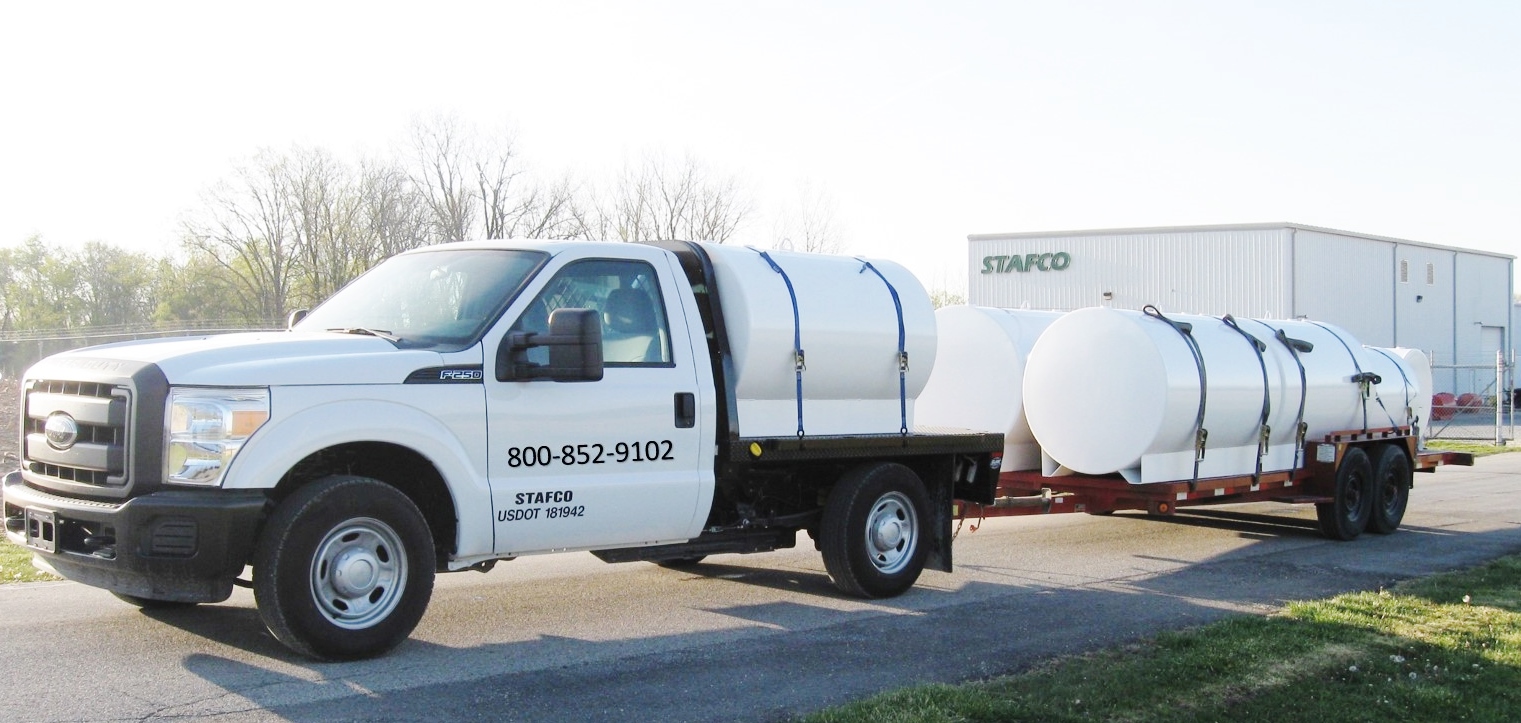
Single wall tanks are a proven and cost-effective solution for a wide range of industrial, agricultural, commercial, and municipal applications. They are often selected when secondary containment is already provided through another method, such as:
- Concrete containment basins
- Dikes or berms
- Containment pans
- Existing containment infrastructure
Because they use less material and have a simpler design, single wall tanks generally cost less than comparable double wall tanks.
What Is a Double Wall Storage Tank?
A double wall tank includes an inner tank surrounded by a second outer wall. The space between the two walls creates built-in secondary containment.
If the inner tank develops a leak, the outer wall is designed to contain the product before it can reach the surrounding environment. Many double wall tanks also incorporate leak detection systems that help operators identify issues before they become larger problems.
When Does a Single Wall Tank Make Sense?
Single wall tanks are often the best choice when:
- Existing secondary containment is already available
- Initial project cost is a primary concern
- Site regulations allow their use
- The application does not require integrated containment
For many industrial facilities, maintenance operations, and agricultural applications, a properly installed single wall tank can provide decades of dependable service.
When Is a Double Wall Tank the Better Option?
Double wall tanks are frequently selected when:
- Secondary containment is required
- Site space is limited
- Environmental protection is a high priority
- Leak monitoring is desired
- Local regulations favor integrated containment systems
Because the containment is built into the tank itself, many facilities can simplify installation compared to constructing separate containment structures.
Cost Isn’t Always the Whole Story
Many buyers initially focus on the purchase price of the tank itself.
While a single wall tank generally has a lower upfront cost, the total project cost may also include secondary containment construction, site preparation, permitting requirements, and long-term maintenance considerations. In some situations, a double wall tank can become the more economical solution once those additional costs are considered.
Which Tank Is Right for Your Application?
There is no universal answer.
A single wall tank may be ideal for one facility, while a double wall design may be the better fit for another. The best choice depends on:
- The product being stored
- Site conditions
- Available space
- Regulatory requirements
- Operational preferences
At STAFCO, we help customers evaluate these factors every day. Whether you need a standard fuel tank, a custom chemical storage tank, or a specialized industrial application, our team can help you determine the best solution for your project.
Contact STAFCO to discuss your storage requirements and receive guidance on selecting the right tank for your operation.